You start the car on a cool Mississauga morning, back out of the driveway, and there it is: a sharp, high-pitched squeal from under the hood. By the time you reach the Queensway or merge onto the QEW, it is gone. The next morning, it comes back. Is this something to worry about, or just a normal cold-engine noise that GTA drivers live with every fall and winter?
The honest answer is that it depends on what is actually squealing. A cold-start squeal is one of the most common noise complaints heard by engine service technicians in the GTA, and it can point to several different things: a worn serpentine belt, a tired belt tensioner, a stressed AC compressor, or something as simple as morning dew sitting on the pulleys. Some of these are harmless for a few more weeks. Others can leave you stranded with a dead battery or an overheating engine if the belt lets go on the highway.
This guide walks through why the noise happens more in Mississauga’s climate, how to tell the difference between a minor annoyance and a real warning sign, and what a proper vehicle maintenance inspection actually checks. If you would rather skip straight to a diagnosis, YST Tuning offers a fast belt and accessory-drive inspection as part of our full auto repair services in Mississauga.
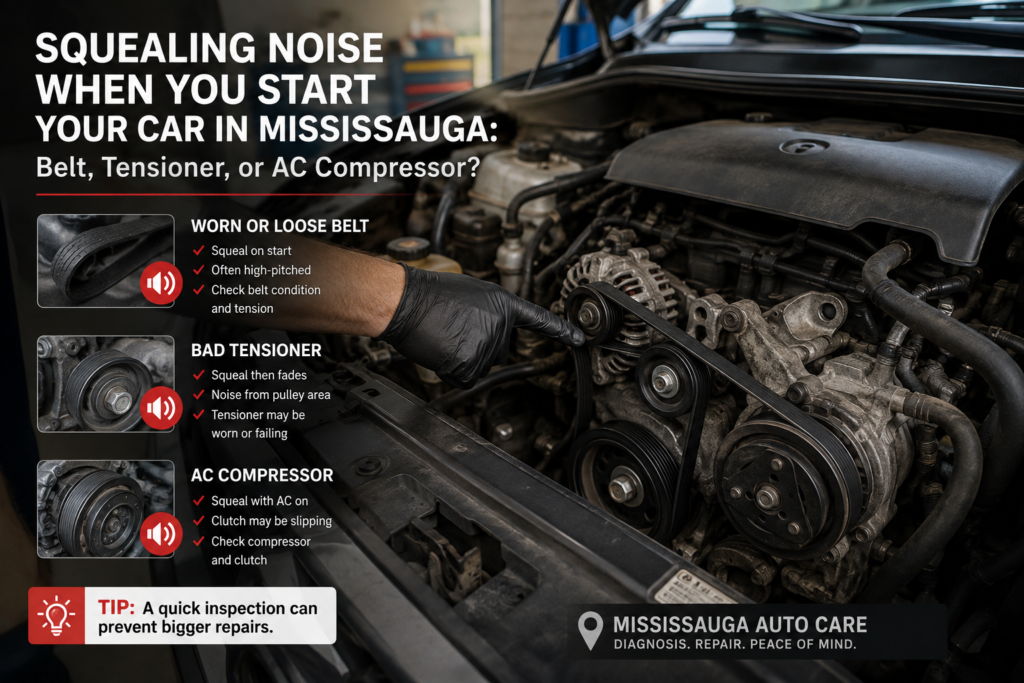
Squealing Noise When You Start Your Car in Mississauga: Belt, Tensioner, or AC Compressor?
What That Cold-Start Squeal Usually Means
Almost every accessory in a modern engine bay—the alternator, the power steering pump, the air conditioning compressor, and sometimes the water pump—is driven by a single rubber belt called the serpentine belt. It winds its way around a series of pulleys, kept tight by a spring-loaded tensioner. When that belt is cold, worn, glazed, or simply under the wrong amount of tension, it can slip against a pulley for a second or two before it grips properly. That brief slip is what you hear as a squeal or chirp.
The reason it fades as you drive is straightforward: the rubber warms up, becomes more flexible, and grips the pulleys the way it is supposed to. That does not mean the noise is nothing. A belt that squeals every morning is telling you something about its condition, its tension, or the parts it turns—and that story tends to get worse before it gets better.
Why This Happens More Often in Mississauga and the GTA
Rubber belts are more sensitive to temperature and moisture than most drivers realize, and the GTA’s weather swings are hard on them in a few specific ways:
- Overnight temperature drops. Once mornings dip toward the single digits, rubber compounds stiffen and lose grip for the first minute of driving, exactly when the alternator and power steering pump are demanding the most from the belt.
- Humidity and dew. Cars parked outside overnight near the lake or in low-lying areas of Mississauga and Etobicoke often collect condensation on the engine bay. A damp belt slips more easily than a dry one, at least until it dries out on the drive.
- Stop-and-go commuting. Idling in traffic on Hurontario or the 401 keeps the belt under sustained load at low RPM, which is a harder environment for a marginal belt or tensioner than steady highway driving.
- Road salt and grit. Winter road spray can find its way onto the belt and pulleys, and dried salt residue changes the friction on the belt’s ribbed surface.
None of this means every GTA car will develop a squeal. But it does mean a belt or tensioner that is already near the end of its life is far more likely to announce itself on a cold, damp Mississauga morning than it would in a milder climate.
Common Causes of a Squealing Noise on Startup
A cold-start squeal can come from several different sources, and a proper diagnosis rules each one in or out rather than guessing.
Glazed or worn serpentine belt
Over time, heat and friction harden and polish the ribbed surface of the belt. A glazed belt looks shiny instead of matte and loses its grip on the pulleys, especially when cold. Cracking, fraying edges, or missing chunks of rib are signs the belt is due for replacement regardless of the noise.
Weak or failing belt tensioner
The automatic tensioner keeps constant pressure on the belt using a spring and a pivot bearing. When the spring weakens or the bearing starts to wear, the belt cannot maintain proper tension, and it slips under load even if the belt itself is in decent shape. A failing tensioner often adds a fluttering or rattling sound alongside the squeal.
Moisture, dew, or fluid contamination
Overnight condensation is usually harmless and clears up within a minute of driving. Oil or coolant contamination is a different story – a leaking gasket, seal, or hose can spray fluid onto the belt, and that fluid softens the rubber and destroys its grip permanently. If the squeal never fully goes away, or it is joined by a fluid smell, this is worth checking.
Misaligned or worn pulley
Each accessory the belt drives – the alternator, power steering pump, AC compressor, and idler pulleys – has its own bearing. A pulley that is starting to wear or sits slightly out of alignment can cause a belt to track unevenly and squeal, even with a brand-new belt installed.
AC compressor or alternator under heavy load
A weak battery forces the alternator to work harder right at startup, which increases the load on the belt and can trigger a squeal that a healthy electrical system would not cause. Turning on the air conditioning can have a similar effect if the compressor’s clutch or bearing is starting to fail – if the noise only shows up or gets louder with the AC running, the compressor is a likely suspect rather than the belt itself.
Belt Squeal vs. Other Cold-Weather Car Noises
Cold Mississauga mornings bring out more than one kind of noise, and it helps to know which is which before you book an appointment:
- Belt squeal comes from the front of the engine, fades within a minute of driving, and often changes when you turn the steering wheel or switch on the AC.
- Brake squeal or grinding happens when you press the pedal, not at startup. If your steering wheel also shakes when you brake, that points to a separate issue – see our brake repair page for diagnosis.
- Power steering whine is a lower-pitched groan that gets louder at full steering lock, rather than a squeal that appears the moment the engine turns over.
- Exhaust rattle or tick comes from underneath the car rather than the engine bay, and tends to sound metallic rather than a rubbery squeal.
If you are also seeing a rising temperature gauge alongside the noise, it is worth reading about how a slipping belt can contribute to coolant loss and overheating in GTA traffic, since a stalled water pump is one of the more serious outcomes of a belt problem left unaddressed.
Quick Checks You Can Do Before Booking a Repair
None of these replace a proper inspection, but they help you describe the problem accurately when you call:
- Time it. Note whether the squeal lasts a few seconds, a full minute, or the entire drive. A noise that never goes away is more urgent than one that clears up quickly.
- Test the accessories. With the car safely parked and running, turn the AC on and off and turn the steering wheel lock to lock. A change in the noise narrows down the source.
- Look at the weather pattern. Does it only happen after rain, or only below a certain temperature? That detail helps separate simple condensation from a belt or tensioner that is actually wearing out.
- Do a visual check. With the engine off, look at the belt for shiny patches, cracks, or frayed edges. You do not need to remove anything – just a look with the hood open.
If the squeal is new, brief, and only shows up on damp mornings, it is reasonable to keep an eye on it. If it has been going on for weeks, is getting louder, or shows up regardless of the weather, it is time to have it looked at.
When a Squealing Belt Becomes a Real Problem
A slipping belt is annoying. A broken belt is a roadside emergency. Because the same belt typically drives the alternator, the power steering pump, and the water pump, a sudden failure can mean losing your charging system, your steering assist, and your engine cooling all at once – usually with very little warning beyond the noise you have been hearing for days or weeks.
Watch for these signs that the issue has moved from “keep an eye on it” to “book an appointment soon”:
- The squeal no longer fades once the engine warms up
- A battery or charging warning light appears alongside the noise
- The steering feels heavier than usual, especially at low speed
- You notice cracking, fraying, or missing chunks on the belt itself
- The temperature gauge creeps up in stop-and-go traffic
None of these on their own mean you are about to be stranded, but together they are a reasonable reason to get the belt and tensioner inspected before a commute across the GTA turns into a tow-truck call.
What YST Tuning Checks During a Belt Noise Diagnosis
When a Mississauga driver books a cold-start noise complaint with us, our technicians do not just replace the belt and hope the noise goes away. A proper inspection covers the whole accessory-drive system:
- Visual inspection of the belt for glazing, cracking, fraying, and rib wear
- Tensioner arm movement and spring tension check, both at rest and under load
- Idler and accessory pulley bearings, checked by hand for roughness or play
- Alternator output and battery health, since a weak battery can mimic or worsen belt noise
- AC compressor clutch engagement, to rule out a compressor-specific noise
- A check for oil or coolant leaks near the belt path
This is the same approach we use across our broader vehicle maintenance inspections in Mississauga – find the actual cause first, then recommend only the parts that need to be replaced.
How Much Does Belt or Tensioner Replacement Cost in Mississauga?
Pricing depends on your vehicle’s make and model, whether the tensioner or idler pulleys need to be replaced along with the belt, and how accessible the belt is on your specific engine. As a general guide, a straightforward serpentine belt replacement on most passenger vehicles tends to fall in the low-to-mid hundreds of dollars, with the cost rising if the tensioner, an idler pulley, or an accessory like the AC compressor also needs attention. Vehicles with tightly packaged engine bays or all-wheel-drive accessory layouts can take longer to access, which affects labour time.
Because the real cost depends on what the inspection finds, the most accurate way to get a number for your specific car is a quick diagnostic visit. That way you are quoted for what your vehicle actually needs rather than a generic estimate.
Related Engine and Maintenance Services
A cold-start squeal often overlaps with other systems on the car. These related pages may help if you are noticing more than one symptom:
- Engine Service – full inspection and maintenance for check engine lights, rough idling, and performance concerns
- Car Battery Replacement in Mississauga – for when a weak battery is straining the alternator and belt
- Coolant Leak Repair in Mississauga – if the noise comes with a rising temperature gauge
- Engine Diagnostics in Mississauga – for check engine lights or intermittent warning lights alongside the noise
- Vehicle Maintenance – our full preventive maintenance program for GTA drivers
FAQ: Squealing Noise on Cold Start in Mississauga
Why does my car only squeal in the morning?
Cold, stiff rubber grips the pulleys less effectively than warm rubber, so a marginal belt or tensioner is more likely to slip right after startup. As the engine warms up over the first minute or two of driving, the belt regains flexibility and the noise usually disappears – until the next cold start.
Is it safe to keep driving with a squealing belt?
A brief squeal that fades quickly is usually not an emergency, but it is not something to ignore indefinitely either. Since the belt often drives your alternator, power steering, and water pump, a sudden failure can affect all three systems at once. If the noise is getting longer, louder, or more frequent, it is best to have it inspected before it becomes a roadside breakdown.
Can humidity or rain really cause belt noise?
Yes. Moisture from overnight dew, rain, or a car wash can temporarily reduce the belt’s grip on the pulleys, causing a squeal that clears up once the belt dries. This is normal on an otherwise healthy belt, but a belt that is already glazed or worn will squeal more dramatically and more often when it is damp.
How long does a serpentine belt usually last?
Most manufacturers design serpentine belts to last several years or roughly 80,000 to 100,000 kilometres under normal conditions, though heat, contamination, and stop-and-go GTA driving can shorten that. Rather than relying on mileage alone, a visual check for cracking or glazing during regular maintenance is the more reliable way to catch a worn belt before it fails.
Does YST Tuning offer same-day belt or tensioner replacement?
In most cases, yes. A serpentine belt and tensioner inspection is a quick job, and if a replacement is needed, we can usually complete it the same day once the correct parts are confirmed for your vehicle. Contact our Mississauga shop to check current availability.
Book a Belt Noise Diagnosis in Mississauga
A squeal on a cold morning is easy to brush off, right up until the belt that has been slipping for weeks finally lets go on the 403. If your car has developed a cold-start squeal, chirp, or any other unfamiliar noise, the team at YST Tuning Auto Service in Mississauga can inspect the belt, tensioner, pulleys, and related components and give you a clear answer – and a same-day fix where possible.
Book your belt and engine noise inspection with YST Tuning at 3390 Wolfedale Rd, Unit 1, Mississauga, or call (905) 276-3390.